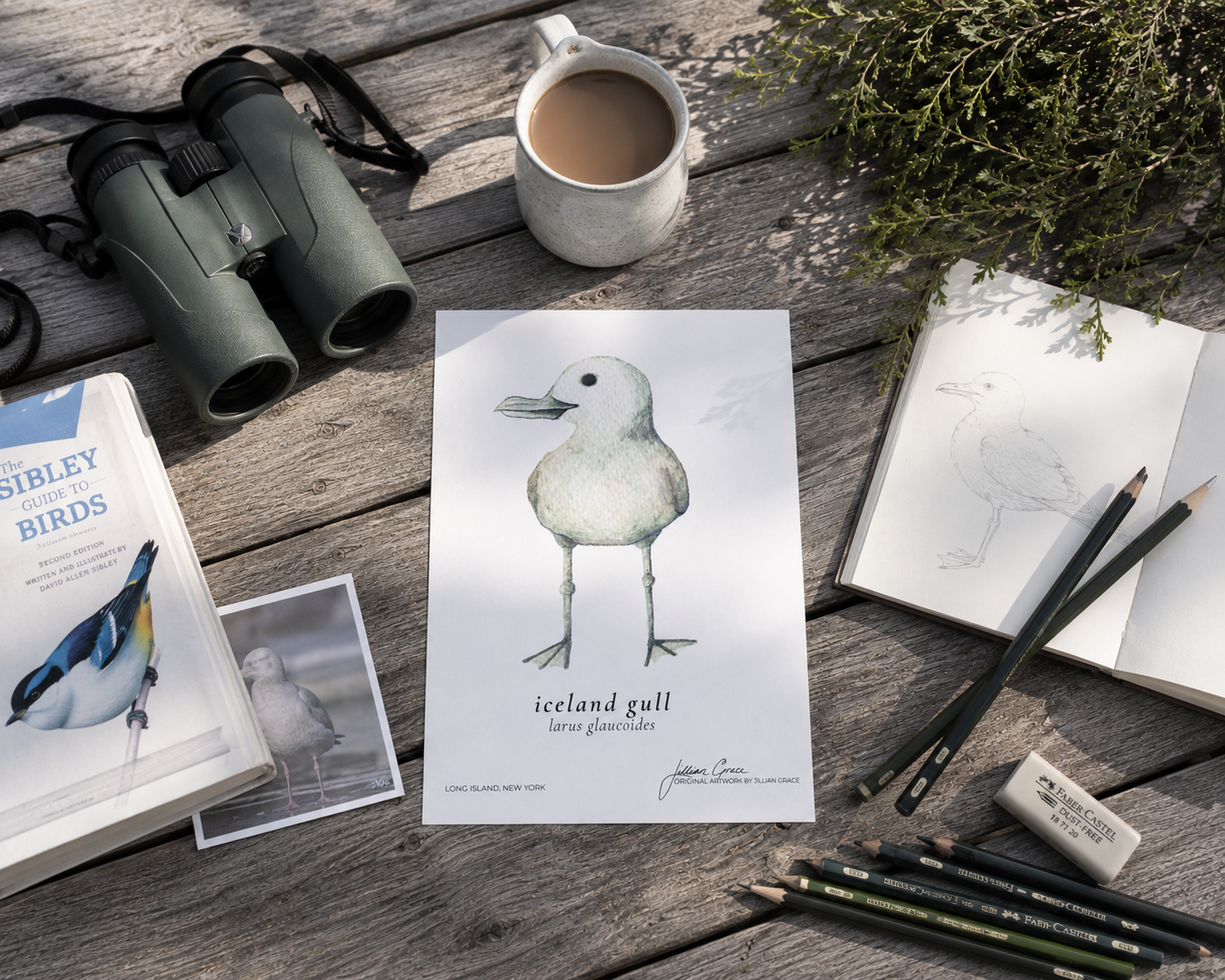
Wildlife in August on Long Island
Mute Swan (Cygnus olor)
Where they live: Bays, tidal creeks, ponds, lakes, and wetland areas. This month, I spotted a family of five on the Peconic Bay.
Appearance: All-white feathers, a curved neck, an orange bill, and a black face knob. 20-25 lbs. 7 ft. wingspan.
Diet: Aquatic vegetation such as marsh grasses, seaweeds, algae, clover and occasionally small sea insects or snails.
Fun Fact: Their long necks contain 24 to 25 vertebrae. This high bone count allows a full 360° rotational field of movement.
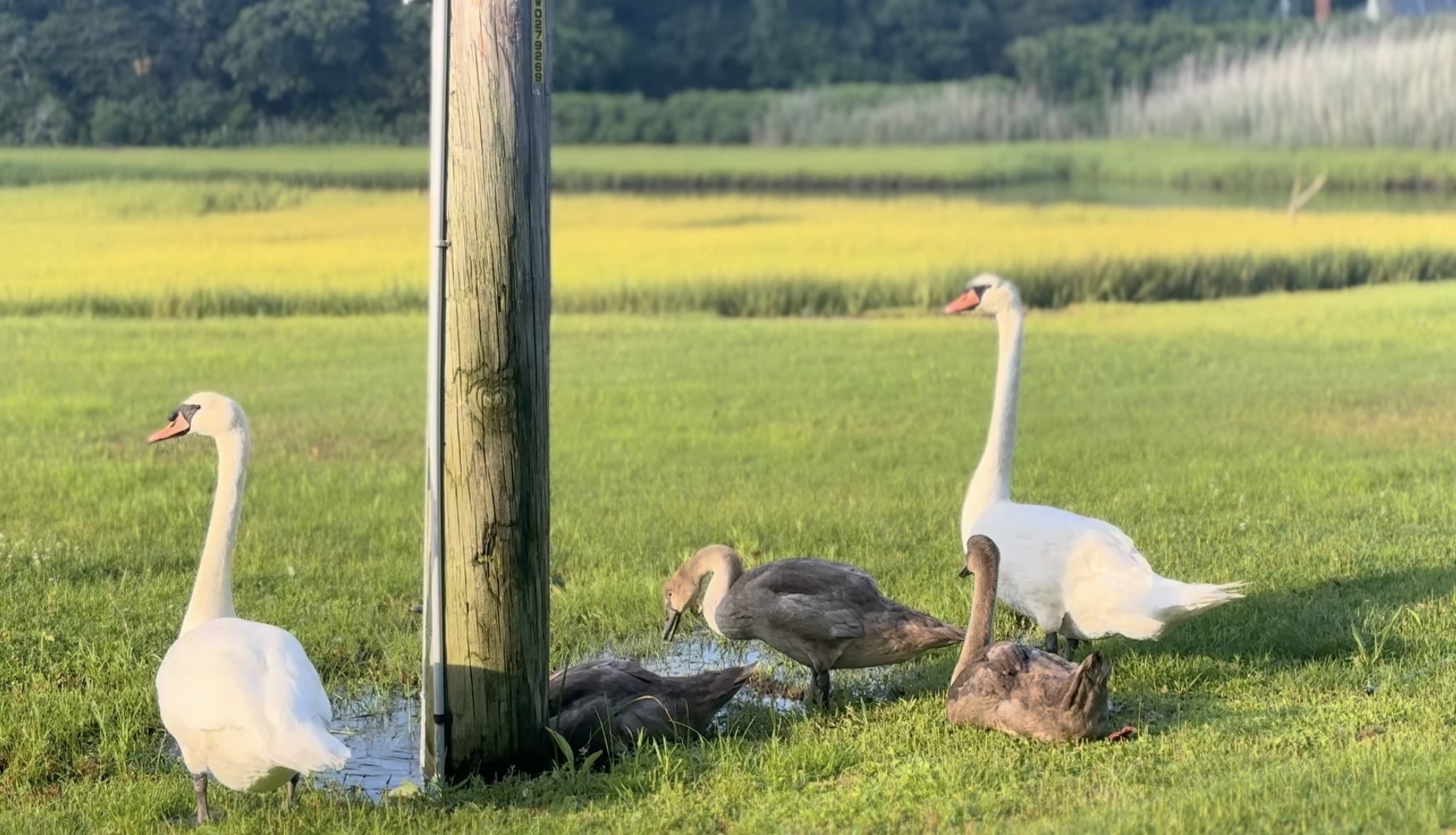
Family of Five, Peconic Bay, August 2026.
Common Gull (Larus canus)
Where they live: Prefers coastal beaches, wetlands, lakes, marshes, and agricultural fields or large grassy plots. You will find these at every shore (or McDonalds parking lot) on Long Island!
Appearance: Clean white head, pale grey back and upperwings, and black wingtips. A slender yellow-bill and dark eyes.
Diet: Best described as an ‘Opportunistic Omnivore.’ Depending on the season and location, they’ll eat anything from small marine life to food scraps to insects.
Fun Fact: Clever and adaptive, they’ve learned to carry heavy clams and mussels high into the air and drop them onto roadways or rocks to smash the shells open.
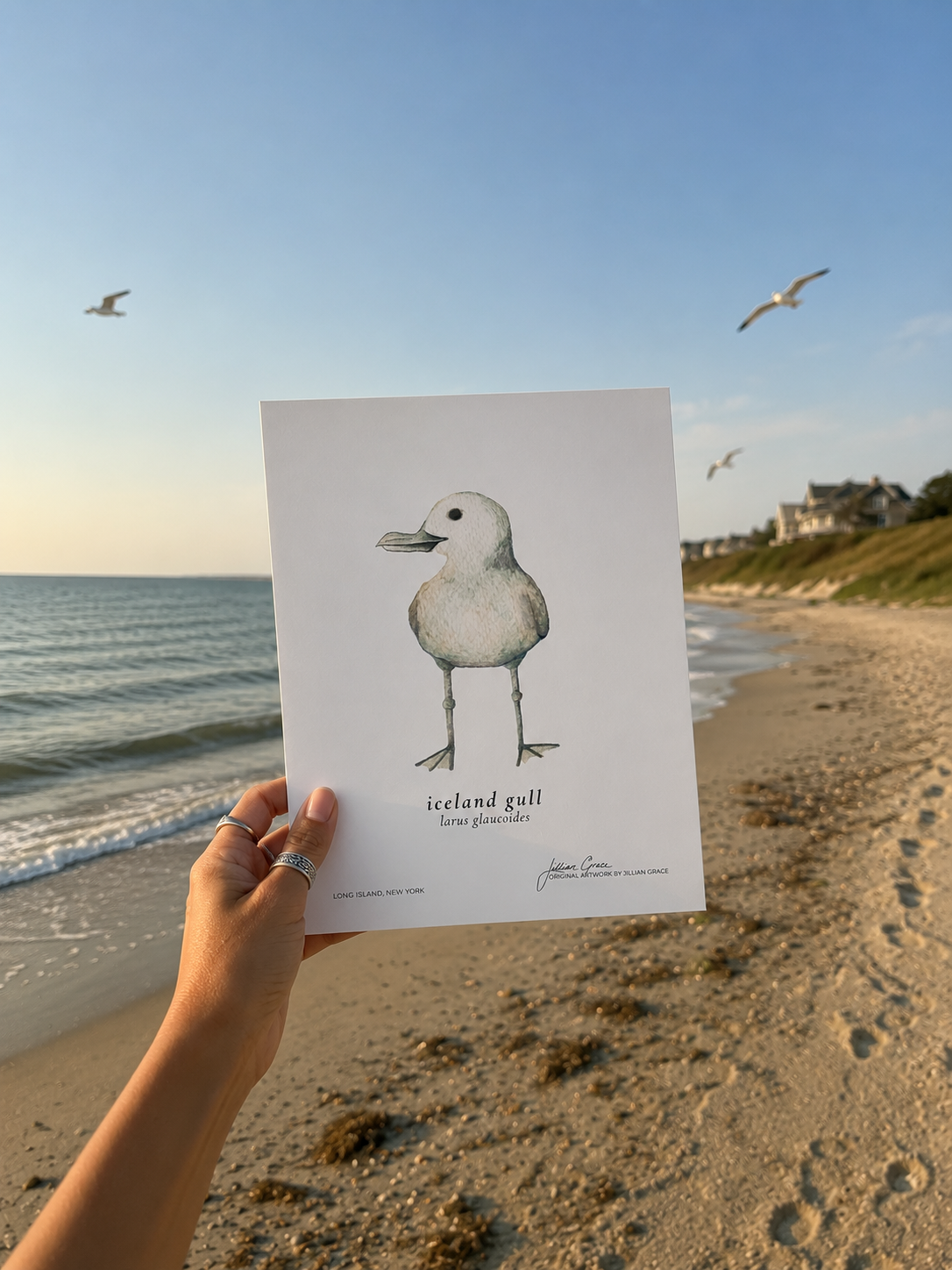
Original Artwork by Jillian Grace
White-Tailed Deer (Odocoileus virginianus)
Where they live: Forests, farmlands, fields, brushlands
Appearance: With reddish-brown in summer and grayish-brown in winter, only males grow bony antlers in the spring, which they shed every winter after mating season.
Diet: As herbivores, these deer eat green plants, twigs, buds, fruit, and acorns
Fun Fact: Incredibly athletic, these commonly found friends are expert high jumpers, broad jumpers and they’re strong swimmers. Additionally, they lack the ability to see red/orange colors - which is one reason hunters wear that bright orange color.
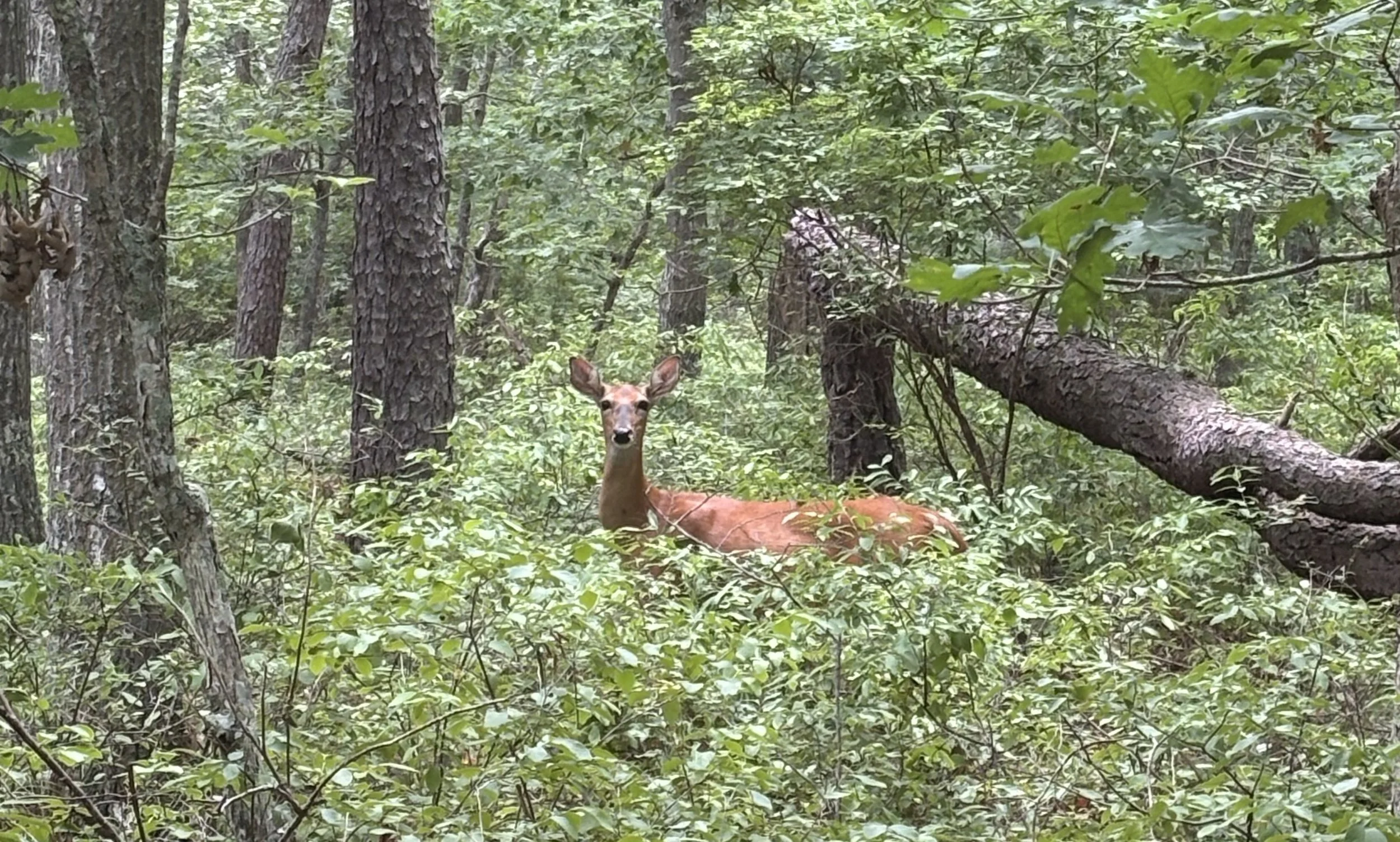
White-Tailed Deer, August 2026
Painted Lady Butterfly (Vanessa cardui)
Where they live: Anywhere with an abundance of wildflowers and sunshine …like me. Open, sunny areas, coastal dunes, parks and preserves.
Appearance: Measuring from 2-3.5 inches, they’re a pinkish-orange and brown wings, the upperwings tips are darker with white spots.
Diet: Flower nectar, fresh fruit
Fun Fact: These butterflies are fast fliers, reaching speeds up to 30 miles per hour.
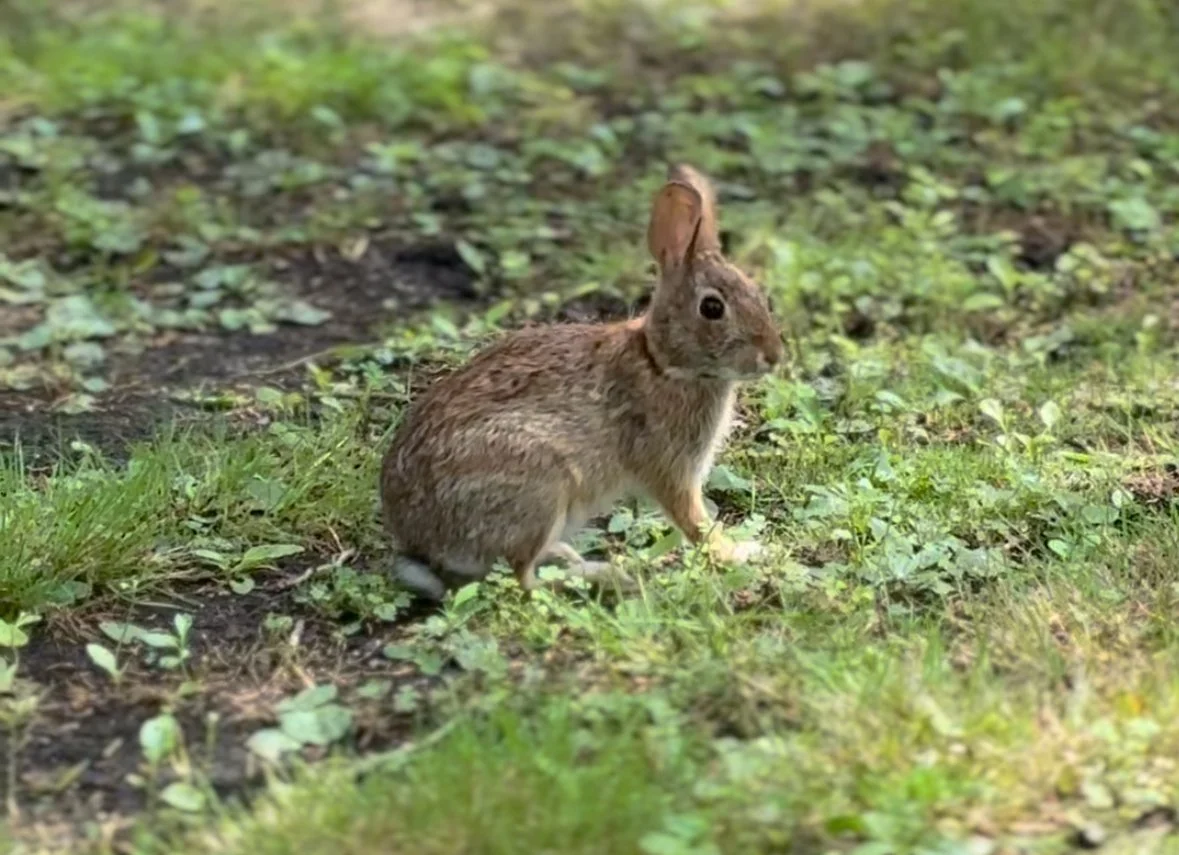
Eastern Cottontail, August 2026
Eastern Cottontail (Sylvilagus floridanus)
Where they live: grassy fields, pastures, meadows, tall grasses, hedgerows, brushlands
Appearance: Brownish-gray to reddish-brown fur with a white belly and a classic, white-bottomed tail
Diet: green grasses, clover, and herbs in spring and summer, switching to woody twigs, buds, and bark in winter
Fun Fact: These furballs have scent glands under their chins and will rub them on areas to mark their territory. Secondly, their stomach muscles form a one-way valve, making it physically impossible for them to throw up.
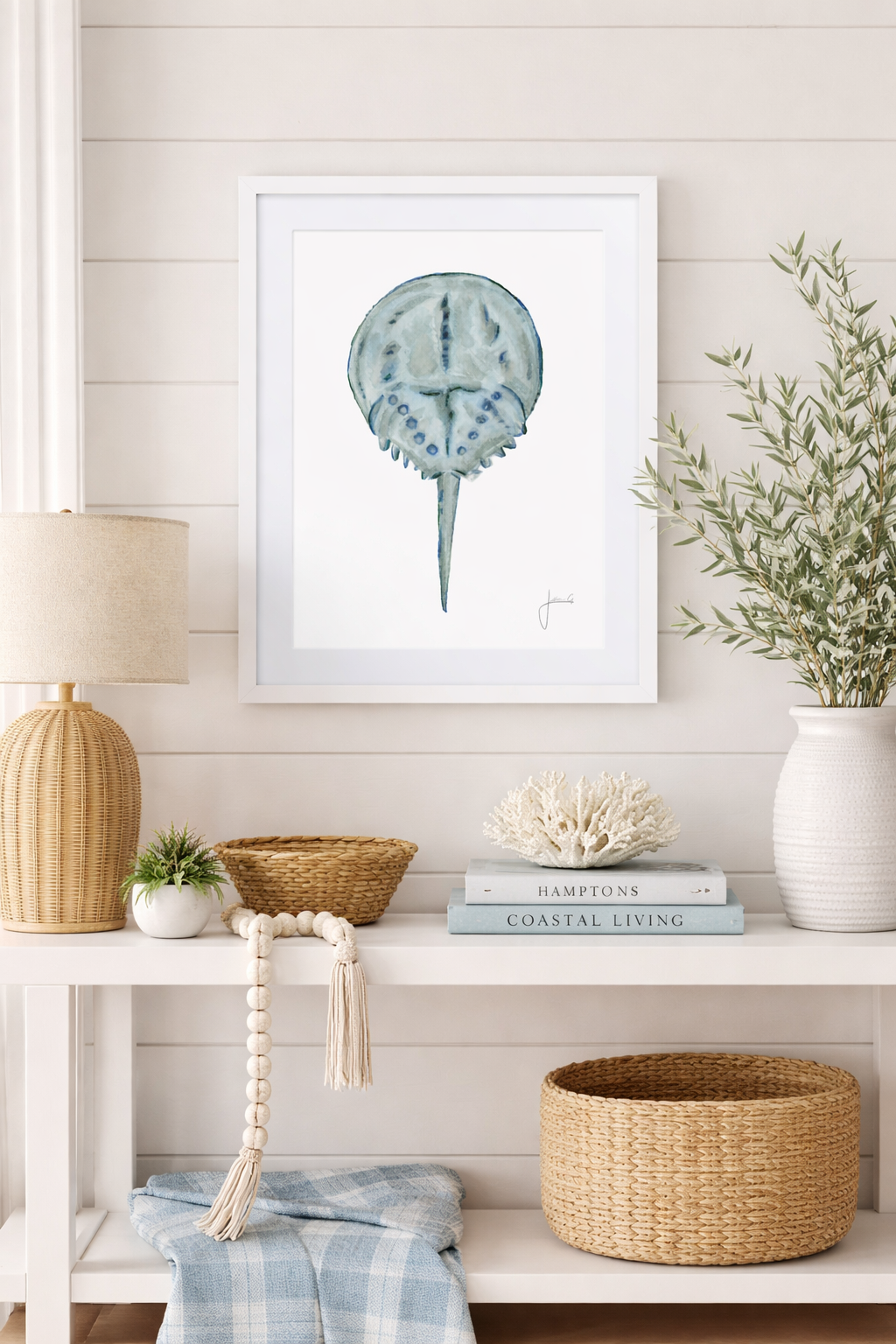
Original Artwork by Jillian Grace Studio
Atlantic Horseshoe Crab (Limulus polyphemus)
Where they live: Shallow coastal marine waters and estuarine areas. I counted 11 horseshoe crabs at a recent visit to the Shinnecock Bay.
Appearance: Helmet-like appearance with a rounded, U-shaped brownish-green shell, a spiky tail, and 10 hidden legs underneath
Diet: Carnivores that eat worms, small clams, and bottom-dwelling organic matter
Fun Fact: These prehistoric anthropod have survived mass extinction, with evidence that will date back around 445 million years to the Paleozoic Era. The ancient marine creatures can live up to 20-40 years in the wild and have bright blue blood because it uses copper instead of iron to carry oxygen, which is why it is a useful tool to scientists. A single gallon of processed horseshoe crab blood can be worth up to $60,000.